
Emergency Line (+91) 7700999193

Why Does My Back Pain Increase at Night?
Back pain is one of the most common health complaints among adults. Many people notice that their discomfort becomes worse after sunset and often ask, “Why Does My Back Pain Increase at Night?” If you experience increased pain while trying to sleep or rest, you are not alone. Nighttime back pain can affect sleep quality, daily productivity, and overall health.
Understanding the causes behind worsening back pain at night can help you find the right treatment and prevent further complications.
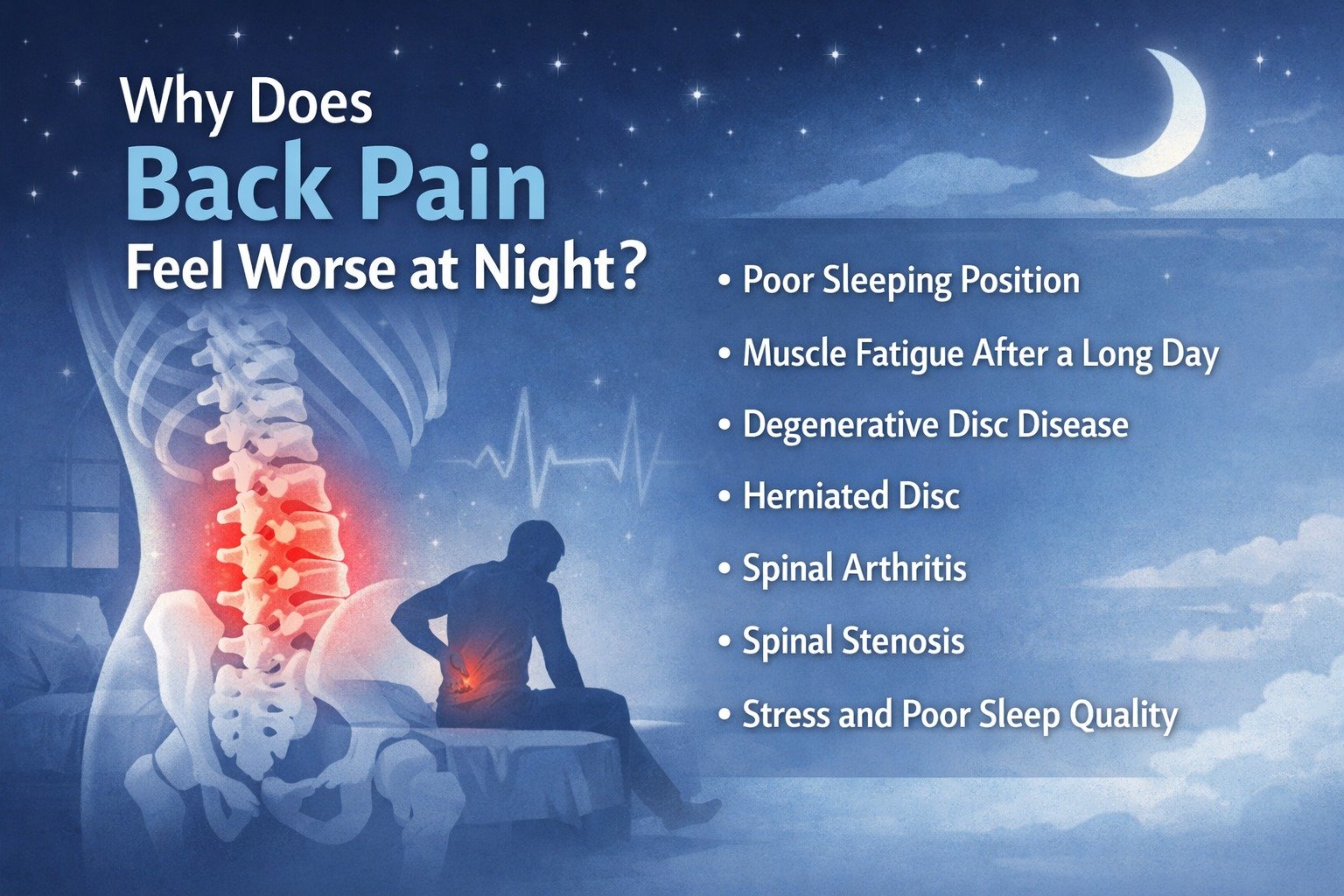
Why Does Back Pain Feel Worse at Night?
There are several reasons why back pain may become more noticeable during the night. During the day, you are usually busy with work, household activities, or social interactions. These activities can distract your mind from pain sensations.
At night, when everything becomes quiet and you lie down, your attention naturally shifts toward physical discomfort. Additionally, certain body positions and underlying medical conditions may contribute to increased pain during sleeping hours.
Poor Sleeping Position
One of the most common reasons for nighttime back pain is poor sleeping posture.
Sleeping on a mattress that is too soft or too hard can place extra pressure on your spine. Similarly, sleeping without proper neck and back support may lead to muscle strain and spinal misalignment.
To reduce discomfort:
- Use a supportive mattress
- Maintain proper spinal alignment
- Avoid sleeping on your stomach
- Use pillows strategically to support your body
Simple changes in sleeping posture can often provide significant relief.
Muscle Fatigue After a Long Day
Throughout the day, your back muscles work continuously to support your body weight and movements. By nighttime, these muscles may become tired and inflamed.
Muscle fatigue can lead to:
- Tightness in the lower back
- Muscle spasms
- Increased stiffness
- Discomfort while changing positions in bed
Stretching exercises and proper posture during the day can help reduce muscle fatigue and nighttime pain.
Degenerative Disc Disease
As people age, the spinal discs gradually lose moisture and flexibility. This condition is known as degenerative disc disease.
The discs act as cushions between the vertebrae. When they begin to wear down, pressure on nearby nerves and joints can increase.
Symptoms may include:
- Lower back pain
- Pain that worsens while lying down
- Morning stiffness
- Reduced flexibility
Early diagnosis and appropriate treatment can help manage symptoms effectively.
Herniated Disc
A herniated or slipped disc occurs when the soft inner portion of a spinal disc pushes through its outer layer.
This condition can irritate nearby nerves and cause:
- Sharp back pain
- Leg pain (sciatica)
- Numbness
- Tingling sensations
Many patients report that disc-related pain becomes more noticeable at night due to reduced movement and increased pressure in certain sleeping positions.
Spinal Arthritis
Arthritis can affect the joints of the spine and cause inflammation, stiffness, and discomfort.
Symptoms often become worse during periods of inactivity, which is why many individuals experience increased pain at night or early in the morning.
Common signs include:
- Back stiffness
- Reduced mobility
- Aching pain
- Difficulty turning in bed
Proper medical evaluation can help determine the severity of spinal arthritis and the most suitable treatment options.
Spinal Stenosis
Spinal stenosis occurs when the spaces within the spine narrow and place pressure on the spinal cord or nerves.
This condition may cause:
- Back pain
- Leg pain
- Numbness
- Weakness
Symptoms can become more noticeable when lying down for extended periods, affecting sleep quality significantly.
Stress and Poor Sleep Quality
When stress levels increase, the body produces hormones that can tighten muscles and increase pain sensitivity. Poor sleep quality further worsens the problem by preventing proper muscle recovery. If stress-related back pain continues for a long time, consulting a qualified Backbone Doctor in Mumbai can help identify the underlying cause and recommend appropriate treatment. Managing stress through relaxation techniques, meditation, and healthy sleep habits may help reduce nighttime discomfort.
Could Nighttime Back Pain Be a Serious Problem?
While many cases of back pain are related to muscle strain or spinal degeneration, persistent nighttime pain should not be ignored.
Seek medical attention if your back pain is accompanied by:
- Unexplained weight loss
- Fever
- Loss of bladder or bowel control
- Severe weakness
- Persistent pain that does not improve with rest
These symptoms may indicate a more serious underlying condition requiring prompt evaluation.
When Should You See a Specialist?
If your nighttime back pain continues for several weeks or interferes with your daily life, it is important to consult a spine expert.
Dr. Priyank Patel at Jinkushal Hospital specializes in diagnosing and treating various spinal conditions. A detailed clinical examination and advanced imaging tests can help identify the root cause of your discomfort and guide effective treatment.
Patients looking for specialized care can explore the services available at the Back pain specialist clinic in Mumbai through personalized treatment plans designed to address the underlying cause rather than just the symptoms.
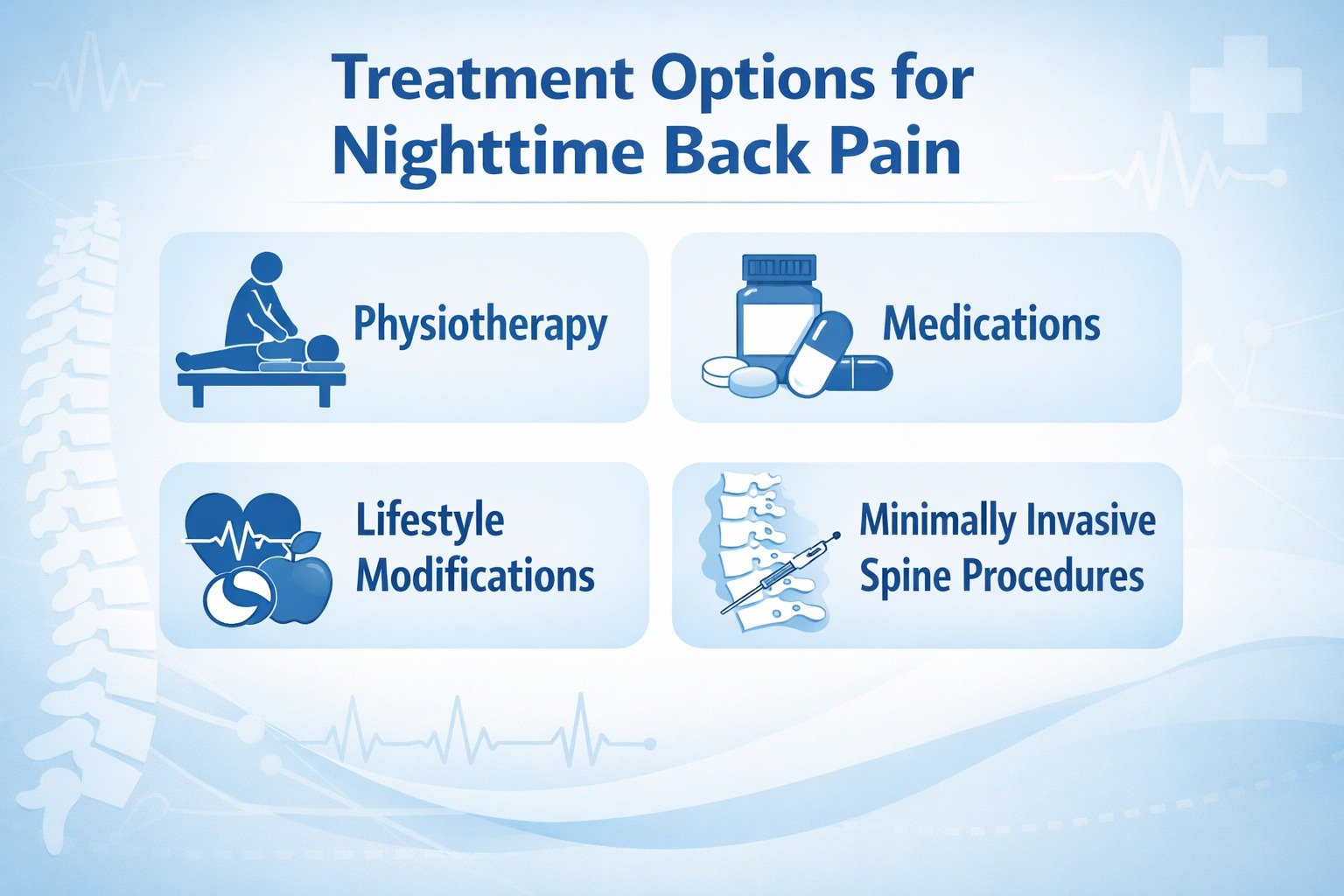
Treatment Options for Nighttime Back Pain
Treatment depends on the underlying cause and severity of the condition.
Common treatment approaches include:
Physiotherapy
Targeted exercises help improve flexibility, strengthen muscles, and reduce pressure on the spine.
Medications
Anti-inflammatory medications and muscle relaxants may provide temporary relief under medical supervision.
Lifestyle Modifications
Maintaining a healthy weight, improving posture, and staying physically active can significantly reduce back pain.
Minimally Invasive Spine Procedures
For certain spinal conditions, advanced minimally invasive procedures may provide long-term relief with faster recovery.
Individuals searching for Back Pain Treatment in Mumbai should focus on receiving a proper diagnosis before beginning treatment, as every patient’s condition is unique.
How Can You Prevent Nighttime Back Pain?
You can lower your risk of nighttime back pain by following these simple tips:
- Maintain good posture throughout the day
- Exercise regularly
- Strengthen core muscles
- Use an ergonomic workstation
- Avoid prolonged sitting
- Sleep on a supportive mattress
- Practice stress management techniques
- Follow a healthy lifestyle
Preventive care plays an important role in maintaining long-term spinal health.
Why Choose Dr. Priyank Patel for Spine Care?
Dr. Priyank Patel is recognized among experienced Back Pain Specialist Doctors in Mumbai for providing patient-focused spine care. His approach emphasizes accurate diagnosis, conservative treatment whenever possible, and advanced spine solutions when required.
Patients seeking expert evaluation can also visit the clinic location through this map reference:
Back pain specialist clinic Thane
For more information about specialized spine treatments, visit:
Backbone Doctor Thane
Conclusion
Nighttime back pain can result from muscle fatigue, poor sleeping posture, degenerative spinal conditions, herniated discs, arthritis, or stress-related factors. Understanding the answer to Why Does My Back Pain Increase at Night? is the first step toward finding effective relief.
If your symptoms persist or affect your sleep and quality of life, consulting experienced back pain specialists in Mumbai can help identify the exact cause and create a personalized treatment plan. Early intervention often leads to better outcomes, improved comfort, and a healthier spine.
Google Map
Know Your Back
Copyright ©2025 all rights reserved
Designed by Hopeland Healthcare