
Emergency Line (+91) 7700999193
When Is Spine Surgery Actually Necessary?
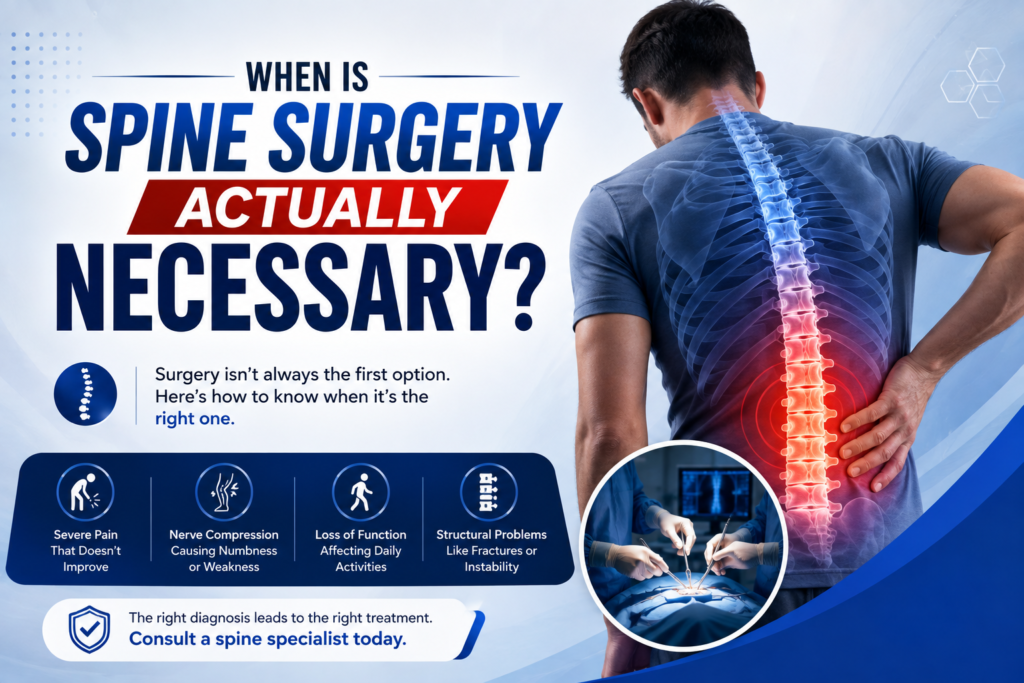
Back pain is one of the most common health concerns, and many people worry that severe or long-lasting pain automatically means they need surgery. However, spine surgery is not usually the first treatment option for back or neck problems. In many cases, symptoms can improve with medicines, physiotherapy, exercise, posture correction, and other non-surgical treatments. So, When Is Spine Surgery Actually Necessary? The answer depends on the cause, severity of symptoms, nerve involvement, and how well the condition responds to conservative treatment.
If back pain is affecting your daily activities, consulting an experienced spine specialist can help identify the underlying cause and determine whether surgery is appropriate.
What Conditions Can Lead to Spine Surgery?
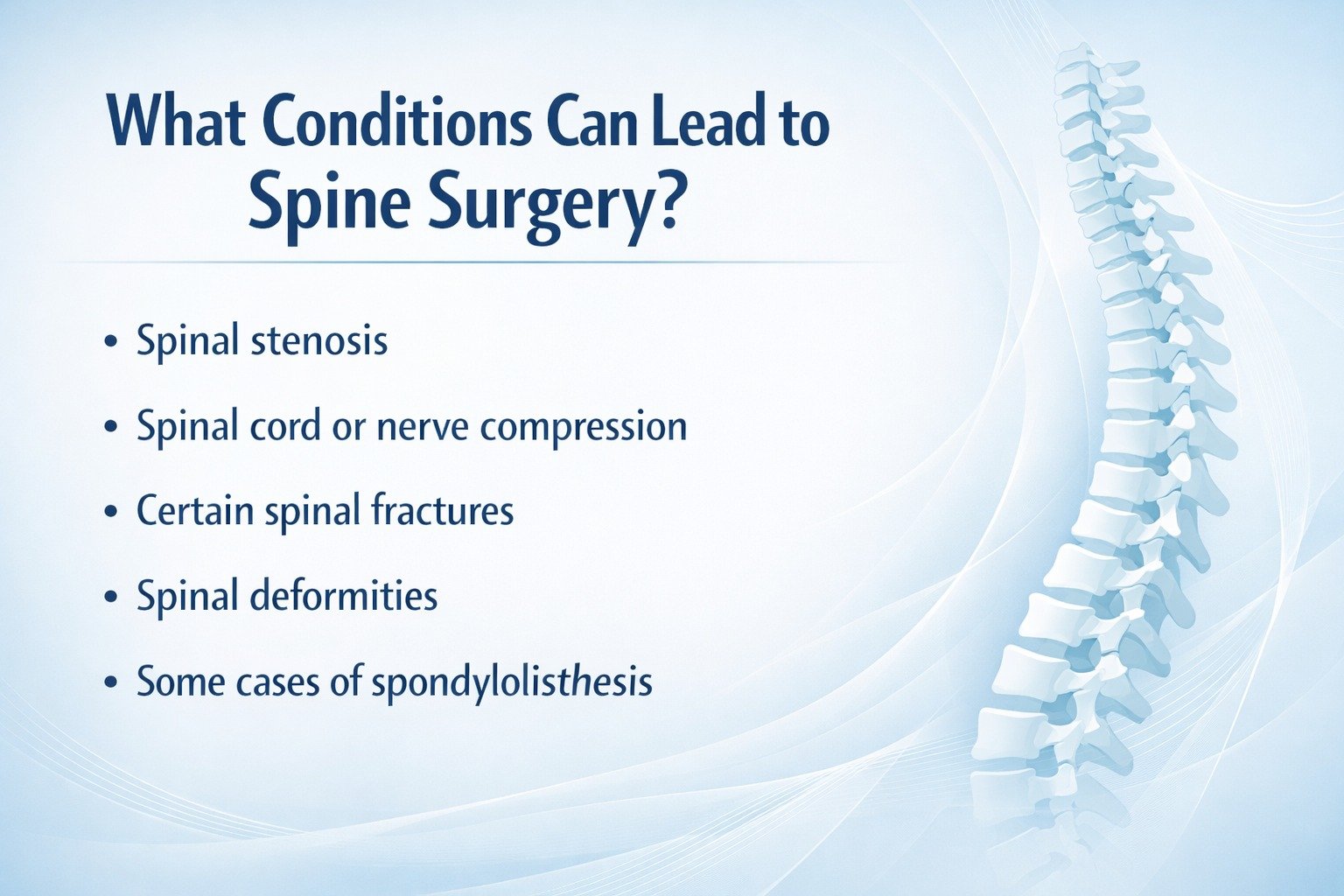
Spine surgery may be considered for certain conditions when other treatments have not provided sufficient relief or when there is a risk of permanent nerve damage. Common conditions that may sometimes require surgery include:
- Severe slipped or herniated discs
- Spinal stenosis
- Spinal cord or nerve compression
- Certain spinal fractures
- Spinal deformities
- Some cases of spondylolisthesis
- Severe degenerative spine conditions
- Spinal infections or tumours in selected cases
Not everyone with these conditions needs surgery. A detailed clinical examination and appropriate imaging, such as an MRI or CT scan, may be required before making a treatment decision.
When Is Spine Surgery Actually Necessary?
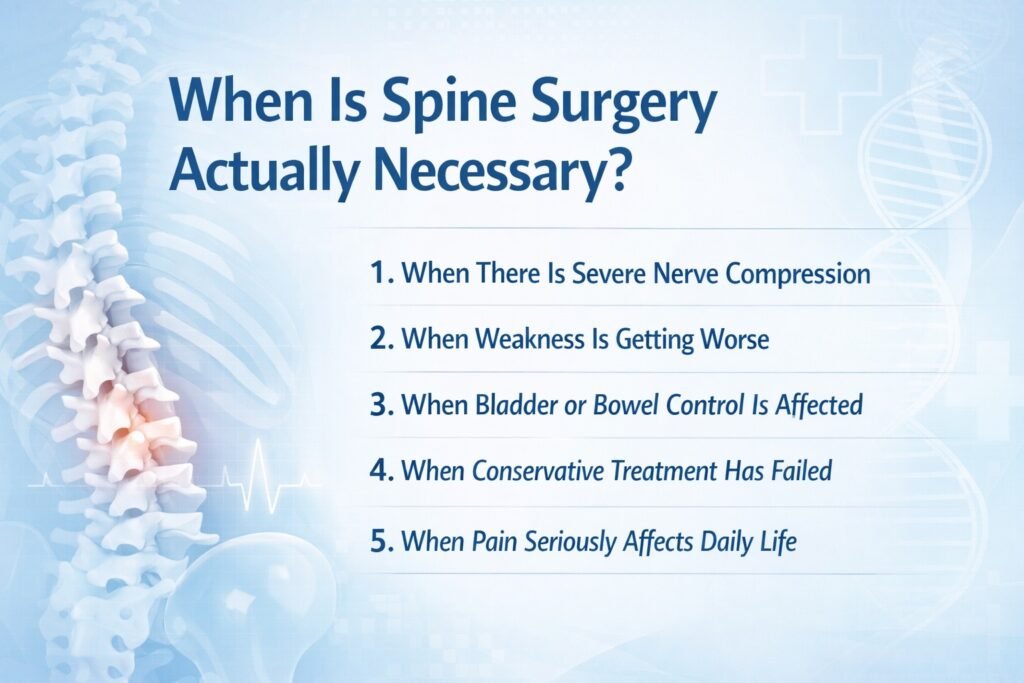
Spine surgery may become necessary when a spinal problem is causing significant nerve compression, progressive neurological symptoms, or severe functional limitations. The decision should always be based on the patient’s individual condition rather than pain intensity alone.
1. When There Is Severe Nerve Compression
A slipped disc or narrowed spinal canal can put pressure on spinal nerves. This may cause pain that travels into the arms or legs, numbness, tingling, or weakness.
If nerve compression is severe or continues despite appropriate non-surgical treatment, surgery may be recommended to relieve pressure on the affected nerve.
2. When Weakness Is Getting Worse
Pain can sometimes be managed with conservative treatment, but progressive muscle weakness requires greater attention. For example, weakness in the leg caused by nerve compression may interfere with walking or standing.
If neurological weakness is worsening, a spine specialist may recommend surgery to prevent further nerve-related problems.
3. When Bladder or Bowel Control Is Affected
Sudden changes in bladder or bowel control combined with severe back pain, numbness around the inner thighs or genital region, or significant leg weakness can indicate serious nerve compression.
This situation requires urgent medical assessment In some cases, emergency surgery may be necessary to reduce the risk of permanent nerve damage.
4. When Conservative Treatment Has Failed
Many spine problems improve without surgery. Doctors may initially recommend treatment such as medicines, physiotherapy, activity modification, stretching, strengthening exercises, and posture correction.
If symptoms continue for an extended period despite an appropriate treatment plan and significantly affect daily life, surgery may become an option.
This is particularly relevant for patients seeking Back Pain Treatment in Thane as the right treatment depends on the underlying cause rather than simply the location or intensity of pain.
5. When Pain Seriously Affects Daily Life
Persistent spinal pain can make it difficult to walk, work, sleep, exercise, or perform routine activities. If diagnostic tests identify a structural problem that can be corrected surgically and non-surgical treatments have not helped, surgery may be considered.
However, surgery should not be recommended only because someone has severe pain. The symptoms, examination findings, imaging results, and overall health of the patient must be considered together.
Does Every Slipped Disc Require Surgery?
No. Most people with a slipped or herniated disc do not automatically need surgery.
Some patients experience improvement with rest from aggravating activities, prescribed medicines, physiotherapy, and gradual return to normal movement. Surgery may be considered when significant nerve compression causes persistent symptoms, progressive weakness, or when pain remains disabling despite appropriate treatment.
An MRI can help identify disc problems, but an abnormal MRI does not necessarily mean surgery is required. The scan findings must match the patient’s symptoms and physical examination.
What About Spinal Stenosis?
Spinal stenosis occurs when the spaces around the spinal nerves or spinal cord become narrowed. It may cause back pain, leg pain, numbness, or difficulty walking.
Mild or moderate symptoms can sometimes be managed through non-surgical treatment. However, if symptoms become severe, walking becomes increasingly difficult, or significant nerve compression is present, surgical treatment may be considered.
A spine specialist can assess whether the narrowing seen on imaging is actually responsible for the patient’s symptoms.
How Do Doctors Decide If Surgery Is Needed?
The decision for spine surgery usually involves several factors, including:
- Medical history and duration of symptoms
- Physical and neurological examination
- MRI, X-ray, or CT findings when appropriate
- Severity of pain and functional limitations
- Presence of numbness or weakness
- Response to non-surgical treatment
- Overall health and medical history
- Potential benefits and risks of surgery
Patients should understand the expected benefits, possible complications, recovery period, and available alternatives before deciding on surgery.
If you are searching for Back Pain Specialist Doctors in Thane choose a qualified specialist who can evaluate your condition comprehensively rather than assuming that surgery is the only solution.
Can Spine Problems Be Treated Without Surgery?
Yes. Many spine conditions can be managed without surgery. Depending on the diagnosis, treatment may include physiotherapy, prescribed medication, lifestyle changes, weight management, posture correction, ergonomic improvements, and specific exercises.
The treatment plan should be personalised because the cause of back pain can vary significantly from one person to another.
People looking for Back pain specialists in Thane should seek an evaluation when pain persists, repeatedly returns, or is associated with symptoms such as numbness, tingling, or weakness.
When Should You See a Spine Specialist?
You should consider a specialist consultation if your back or neck pain:
- Continues despite initial treatment
- Repeatedly comes back
- Travels into your arms or legs
- Causes numbness or tingling
- Causes muscle weakness
- Makes walking difficult
- Interferes with sleep or daily activities
- Follows a significant injury
A back pain specialist clinic in Thane can help evaluate the cause of symptoms and determine whether conservative care, further investigations, or surgical treatment is appropriate.
Why Is Early Evaluation Important?
Ignoring persistent spinal symptoms can sometimes allow a treatable condition to progress. Early evaluation does not necessarily mean surgery. Instead, it helps identify the cause of pain and provides an opportunity to begin appropriate treatment.
A Back Pain Specialist Doctor Thane patients trust should focus on accurate diagnosis, conservative treatment when appropriate, and surgery only when the potential benefits outweigh the risks.
For patients looking for a Backbone Doctor in Thane a consultation can be an important first step toward understanding whether their symptoms are related to the spine, nerves, muscles, or another condition.
Conclusion
Spine Surgery Hospitals can be an effective treatment for selected spinal conditions, but it is not the automatic solution for every case of back pain. Surgery may be necessary when there is significant nerve compression, progressive weakness, serious neurological symptoms, structural instability, or persistent disabling symptoms despite appropriate non-surgical treatment.
The most important step is obtaining an accurate diagnosis. If you are experiencing ongoing back or neck pain, numbness, weakness, or difficulty walking, consulting a qualified Spine Doctor can help identify the underlying condition and guide the right treatment. A specialist evaluation can determine whether conservative care, therapy, medication, or another approach is appropriate. The goal should always be to choose the right treatment for the right condition, with surgery considered only when its potential benefits justify the risks.
Google Map
Know Your Back
Copyright ©2025 all rights reserved
Designed by Hopeland Healthcare