
Emergency Line (+91) 7700999193
Why Do I Feel an Electric Shock Sensation When Bending My Neck?
Have you ever felt a sudden electric shock-like sensation travelling down your neck, back, arms, or legs when you bend your head forward? If you are wondering, Why Do I Feel an Electric Shock Sensation When Bending My Neck?, this feeling may be related to irritation or pressure on the spinal cord or nerves in your neck. Doctors sometimes call this sensation Lhermitte’s sign. It is not a disease itself but can be a warning sign of an underlying spinal condition.
This sensation should not be ignored, especially if it happens repeatedly or comes with numbness, tingling, weakness, or difficulty walking. Understanding the possible causes can help you seek the right medical advice at the right time. Consulting a Back Pain Specialist Doctor Thane can help identify whether the symptoms are related to spinal cord compression, nerve irritation, or another spine condition.
Dr Priyank Patel helps patients understand and manage spine-related problems through proper evaluation and treatment. If you experience recurring neck or spine discomfort, consulting a qualified Backbone Doctor in Thane can help you understand the condition and explore suitable treatment options.
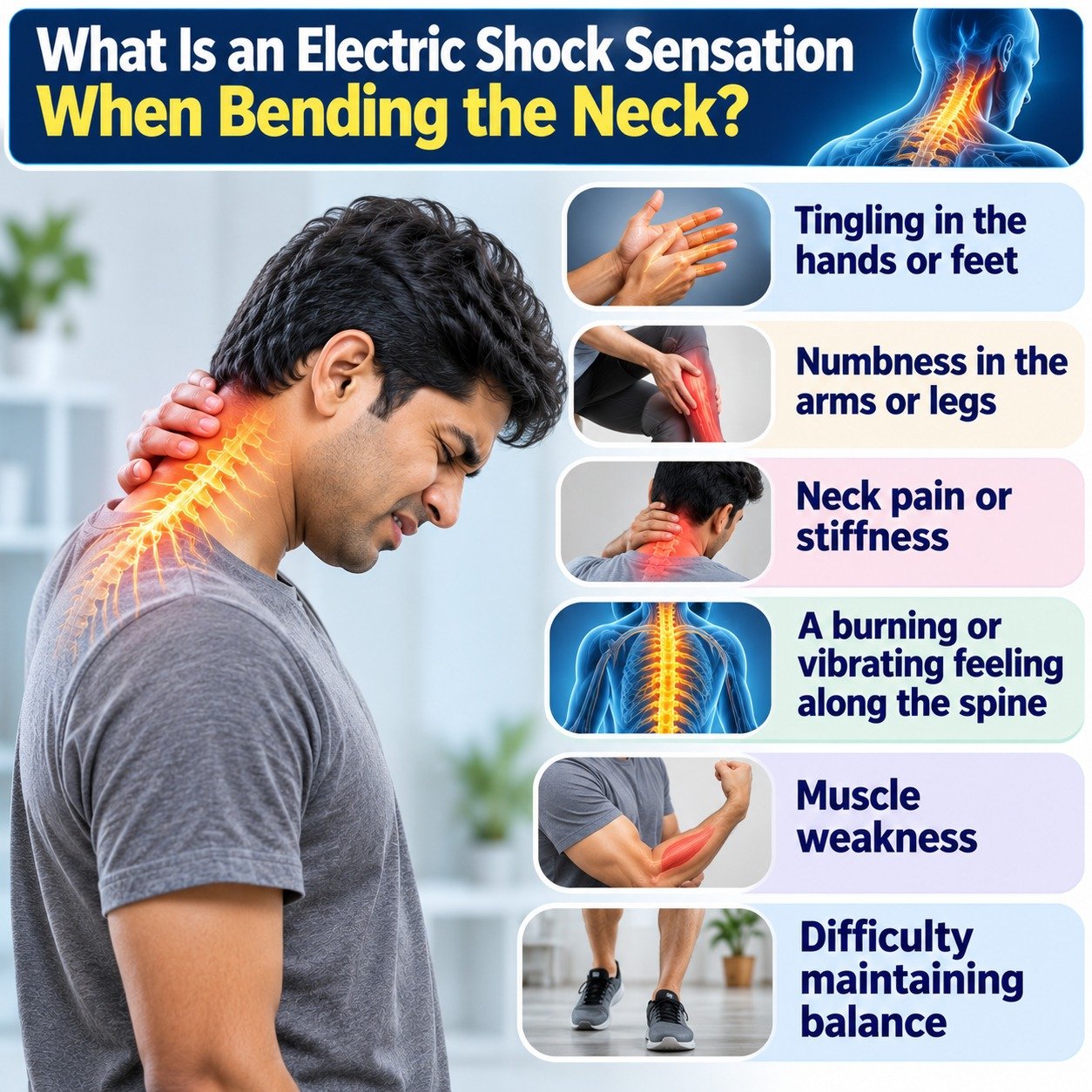
What Is an Electric Shock Sensation When Bending the Neck?
An electric shock sensation when bending the neck is an unusual feeling that may travel from the neck down the spine or into the arms and legs. It often feels like a sudden electrical current passing through the body.
This symptom is commonly associated with Lhermitte’s sign. It may happen when the neck bends forward, stretching or affecting sensitive structures around the spinal cord. People experiencing this sensation should consult Back pain specialists in Thane to identify the underlying cause and receive appropriate medical guidance.
Some people experience this sensation for a few seconds, while others may notice it whenever they look down, bend their head, or perform certain neck movements.
The sensation may occur with:
- Tingling in the hands or feet
- Numbness in the arms or legs
- Neck pain or stiffness
- A burning or vibrating feeling along the spine
- Muscle weakness
- Difficulty maintaining balance
Not everyone experiences the same symptoms. The exact cause needs to be identified through a medical examination. Visiting a Back pain specialist clinic in Thane can help patients undergo proper evaluation and understand suitable treatment options.
What Causes an Electric Shock Feeling When Bending Your Neck?
Several medical conditions can cause an electric shock-like sensation during neck movement. Some common possibilities include:
1. Cervical Spondylosis
Cervical spondylosis is an age-related condition that affects the bones, discs, and joints of the neck. Over time, the spinal discs may lose their flexibility, and bone spurs may develop.
These changes can reduce the available space for nerves or the spinal cord. When the spinal cord becomes compressed, a person may experience tingling, weakness, or electric shock-like sensations.
2. Cervical Disc Herniation
The cervical spine contains soft discs that act as cushions between the bones. Sometimes, a disc may bulge or develop a herniation and press against nearby nerves or the spinal cord.
This can cause:
- Neck and shoulder pain
- Pain travelling down the arm
- Tingling in the fingers
- Numbness or weakness
- Unusual sensations during neck movement
The treatment depends on the severity of the disc problem and whether the spinal cord is affected.
3. Cervical Spinal Cord Compression
The spinal cord carries messages between the brain and the rest of the body. When something puts pressure on it, the normal transmission of nerve signals may be affected.
Cervical spinal cord compression can cause electric shock-like sensations, hand weakness, difficulty with fine movements, and balance problems.
This condition requires proper medical evaluation because untreated spinal cord compression may lead to permanent nerve-related problems.
4. Vitamin B12 Deficiency
Vitamin B12 plays an important role in maintaining healthy nerves. A deficiency can damage the protective covering of nerves and affect normal nerve function.
Some people with vitamin B12 deficiency experience:
- Tingling in their hands and feet
- Numbness
- Muscle weakness
- Balance difficulties
- Unusual nerve sensations
A doctor may recommend blood tests to check vitamin B12 levels when the symptoms suggest a possible deficiency.
5. Multiple Sclerosis (MS)
Multiple sclerosis is a neurological condition that affects the protective covering of nerve fibres in the brain and spinal cord.
Some people with MS experience Lhermitte’s sign, where bending the neck forward produces a brief electric shock-like feeling along the spine.
However, experiencing this sensation does not automatically mean that you have multiple sclerosis. Other spinal and neurological conditions can cause similar symptoms.
When Should You Be Concerned About This Sensation?
An occasional unusual sensation may not always indicate a serious problem. However, repeated electric shock sensations should be evaluated by a qualified doctor.
Pay attention if you experience:
- Frequent electric shock sensations when bending your neck
- Weakness in your arms or legs
- Difficulty holding objects
- Numbness in your hands or feet
- Problems with walking or maintaining balance
- Loss of coordination
- Neck pain that gradually becomes worse
Seek urgent medical attention if you develop new or rapidly worsening limb weakness, difficulty walking, or loss of bladder or bowel control. These symptoms may indicate significant spinal cord or nerve involvement.
Early evaluation can help identify the underlying problem and reduce the risk of further complications.
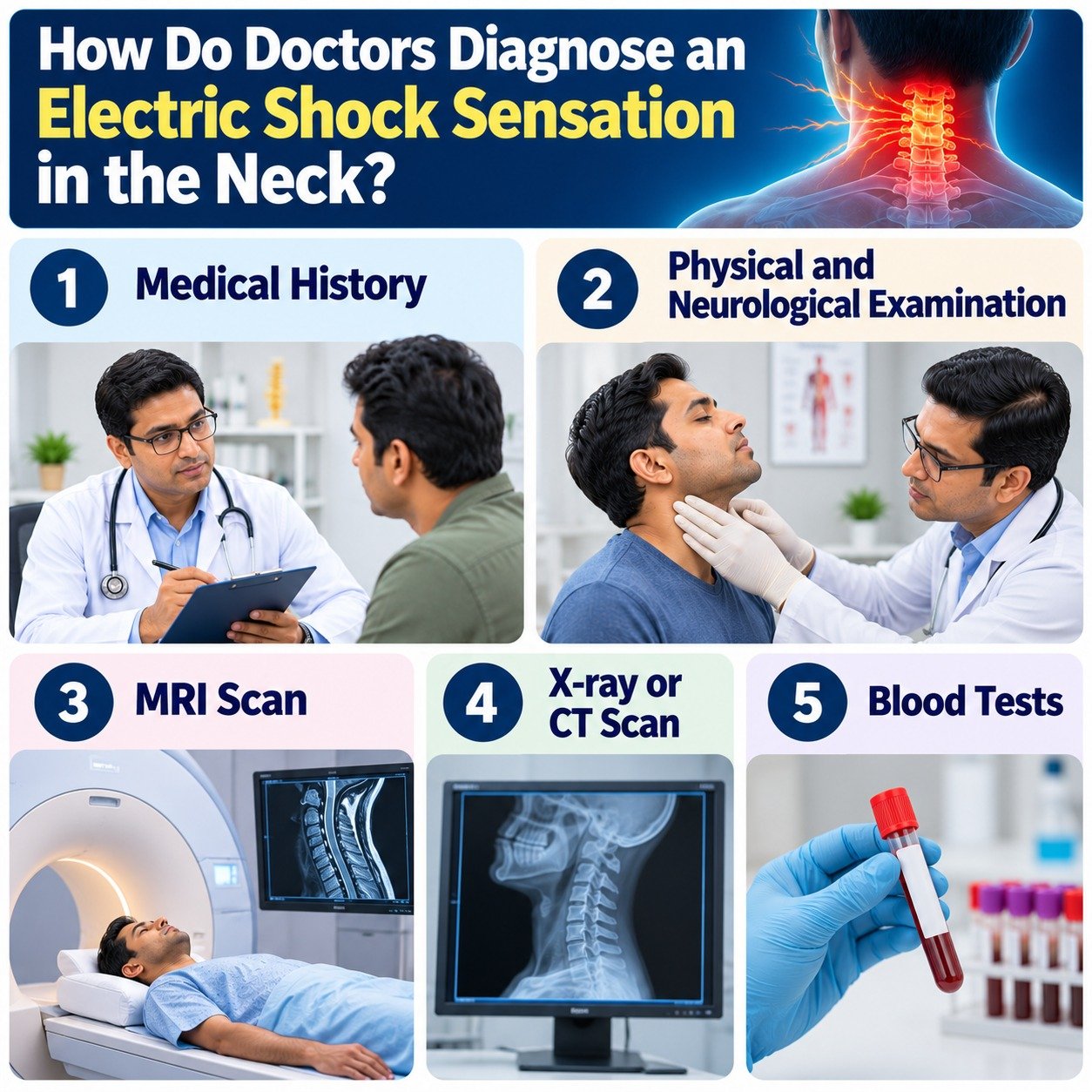
How Do Doctors Diagnose an Electric Shock Sensation in the Neck?
Finding the actual cause is important before starting treatment. Your doctor may recommend different tests depending on your symptoms and medical history.
1. Medical History
The doctor will ask when the sensation started, how frequently it happens, and whether it travels into your arms, legs, or back.
They may also ask about previous neck injuries, existing medical conditions, and other neurological symptoms.
2. Physical and Neurological Examination
The doctor may examine your neck movements, muscle strength, reflexes, sensation, and coordination.
This helps identify possible nerve irritation or signs of spinal cord involvement.
3. MRI Scan
An MRI scan provides detailed images of the cervical spine, including the discs, nerves, and spinal cord.
It can help identify disc herniation, spinal cord compression, and other soft tissue abnormalities.
4. X-ray or CT Scan
An X-ray can show changes in the bones, alignment, and structure of the cervical spine. A CT scan may provide more detailed information about the bones and possible narrowing of the spinal canal.
5. Blood Tests
If a nutritional deficiency or another medical condition is suspected, your doctor may recommend blood tests, including vitamin B12 testing.
Not every patient needs all these investigations. The tests depend on the suspected cause.
What Are the Treatment Options for Electric Shock Sensation When Bending the Neck?
Treatment depends on the condition causing the sensation. There is no single treatment that works for everyone.
1. Medication
Doctors may prescribe medication to manage pain or other nerve-related symptoms when appropriate. Treatment should be based on the underlying diagnosis rather than the sensation alone.
2. Physiotherapy
Physiotherapy may help improve neck movement, posture, flexibility, and muscle strength in selected patients.
However, exercises should be recommended by a qualified professional after evaluating the cervical spine. Avoid forceful neck movements or exercises that reproduce the electric shock sensation.
3. Lifestyle and Posture Changes
Simple changes may help reduce unnecessary strain on the neck.
- Maintain a comfortable sitting posture.
- Keep your computer screen at eye level.
- Avoid looking down at your mobile phone for long periods.
- Take regular breaks during desk work.
- Use a comfortable pillow that supports your neck.
- Avoid sudden or forceful neck movements.
These measures may improve comfort but cannot treat spinal cord compression on their own.
4. Surgical Treatment
Surgery may be considered when there is significant spinal cord compression, progressive neurological weakness, or another structural problem that requires surgical correction.
The type of procedure depends on the location and cause of compression. A spine specialist will explain the benefits, risks, and available treatment options before recommending surgery.
When Should You Consult a Spine Specialist in Thane?
If you regularly experience electric shock-like sensations when bending your neck, consulting a spine specialist is important. Early assessment can help determine whether the problem is related to cervical spondylosis, a slipped disc, spinal cord compression, or another neurological condition.
Patients experiencing persistent neck or back discomfort can also seek Back Pain Treatment in Thane from an experienced spine specialist.
Dr Priyank Patel focuses on evaluating spine-related conditions and recommending appropriate treatment based on each patient’s symptoms and diagnostic findings.
If you are looking for Back Pain Specialist Doctors in Thane getting a proper examination is an important first step. You can also learn more about available treatment options through the spine surgery in Mumbai page.
Patients searching for a Backbone Doctor in Thane should not delay consultation when neck symptoms are associated with weakness, numbness, or balance difficulties.
You can find the clinic location and directions using Spine Doctor Mumbai
Conclusion
An electric shock-like sensation when bending your neck may be a sign of an underlying spinal or neurological condition. Causes can include cervical spondylosis, disc herniation, spinal cord compression, vitamin B12 deficiency, and multiple sclerosis.
Do not ignore repeated sensations, especially when they occur with numbness, weakness, or difficulty walking. Getting an early diagnosis can help you understand the problem and choose the right treatment.
If you are experiencing persistent neck or back symptoms, consult Dr Priyank Patel for an appropriate spine evaluation and guidance on treatment options in Thane.
Google Map
Know Your Back
Copyright ©2025 all rights reserved
Designed by Hopeland Healthcare